What vegetables to plant in spring
The sun is climbing back toward its highest point of the year and days are getting longer, but it is still a gentler light than summer — which suits a specific set of crops better than any other season.
Updated September 2026.
When is spring, where you are
In the northern hemisphere, spring runs roughly March to May. In the southern hemisphere — Australia, New Zealand, South Africa, most of South America — it runs roughly September to November. The dates below refer to the season itself, not a specific month, since it depends which half of the world you are gardening in.
Early, mid and late spring
Spring is not one planting window but three. It starts cold enough for frost and ends warm enough for tomatoes, and what goes in the ground moves with it.
| When | What to plant |
|---|---|
| Early spring Sep south, Mar north |
Cool-season crops that shrug off a late frost: peas, broad beans, lettuce, spinach, radish, onions, and brassica seedlings. |
| Mid spring Oct south, Apr north |
Keep sowing salads, carrots and beetroot every few weeks. Plant potatoes once hard frosts are over. Start tomatoes, capsicum and chillies under cover. |
| Late spring Nov south, May north |
Once the last frost has passed and the soil is warm: tomatoes, capsicum, chilli, eggplant, beans, zucchini, cucumber, sweet corn, pumpkin and basil. |
What to plant, and how much sun it needs
| Vegetable | Sun needed | Notes |
|---|---|---|
| Peas | 4 – 6 hours | Prefer the cooler nights early spring still has; get them in before real heat arrives. |
| Broad beans (fava beans) | 6 hours + | Tolerates part sun. Sow while it is still cool for the best pods. |
| Lettuce & salad greens | 4 – 6 hours | Can bolt (run to flower and turn bitter) in a warm spring; a little afternoon shade helps. |
| Spinach | 4 – 6 hours | Same bolting risk as lettuce if it gets too hot too soon. |
| Brassica seedlings (broccoli, cabbage, cauliflower) | 6 hours + | Best value from a bed that keeps its sun through spring and into summer, since they take a while to mature. |
| Carrots & beetroot | 6 hours + | Tolerates part sun, but loose, stone-free soil matters as much as light for these. |
| Onions & leeks | 6 hours + | Long season crops — get them in early so they have time. |
| Potatoes | 6 hours + | Chit (sprout) indoors first, then plant once the frost risk has passed. |
| Parsley & coriander | 4 – 6 hours | Coriander bolts fast once the weather turns warm and bright. |
| Tomato, capsicum & chilli seedlings | 6 hours + | Raise indoors or under cover, then plant out once frost risk has fully passed — they want full sun once they are in the ground. |
| Radish | 4 – 6 hours | The quickest crop there is — about four weeks from seed. Handy for filling gaps between slower plants. |
| Silverbeet (chard) | 4 – 6 hours | One of the most shade-tolerant leafy crops, and it keeps cropping for months from one planting. |
| Beans (climbing or dwarf) | 6 hours + | Seed rots in cold soil and frost kills the plants, so wait for late spring. Climbing beans cast shade of their own — put them where they will not block a lower bed. |
| Zucchini & cucumber | 6 hours + | Frost-tender and fast once they get going. Two or three zucchini plants feed most households. |
| Sweet corn | 6 hours + | Plant in a block rather than one long row, so the wind can pollinate it. Tall enough to shade whatever grows on its shadow side. |
| Pumpkin & squash | 6 hours + | Needs the full summer ahead of it, so late spring is the time. Give it room — the vines sprawl a long way. |
| Eggplant | 6 hours + | Wants more heat than a tomato. Give it the warmest, sunniest spot you have. |
| Basil | 6 hours + | Blackens at the first touch of cold. Plant it alongside the tomatoes, not before them. |
Sun needs are a general guide. Your climate, variety and soil all matter too — this is where to start, not the whole answer.
Your climate matters more than the calendar
The months above suit a temperate climate. In Australia that covers Sydney, Melbourne, Adelaide and Perth. Elsewhere, shift them:
- Cool areas (Tasmania, Canberra, the highlands): frost can arrive well into October or later. Hold frost-tender crops back until it has clearly passed. Melbourne gardeners have a rule of thumb for the same reason: tomatoes go in around Melbourne Cup Day, early November.
- Subtropical areas (Brisbane, northern New South Wales): warm crops can go in from early spring, and cool crops run to seed quickly once it heats up.
- The tropics (Darwin, Cairns): spring is the build-up to the wet season. Most of the vegetables on this page do better planted in the dry season, from about April to August.
Which bed gets the sun-hungry crops
Everything marked 6 hours + belongs in the sunniest bed you have. In the southern hemisphere that is usually the north-facing side; in the northern hemisphere, the south-facing side. The 4 – 6 hour crops cope with an east-facing bed that gets the gentler morning sun. A west-facing bed gets the harsh afternoon sun, so bolting salads do badly there by late spring.
A spring-specific quirk worth knowing
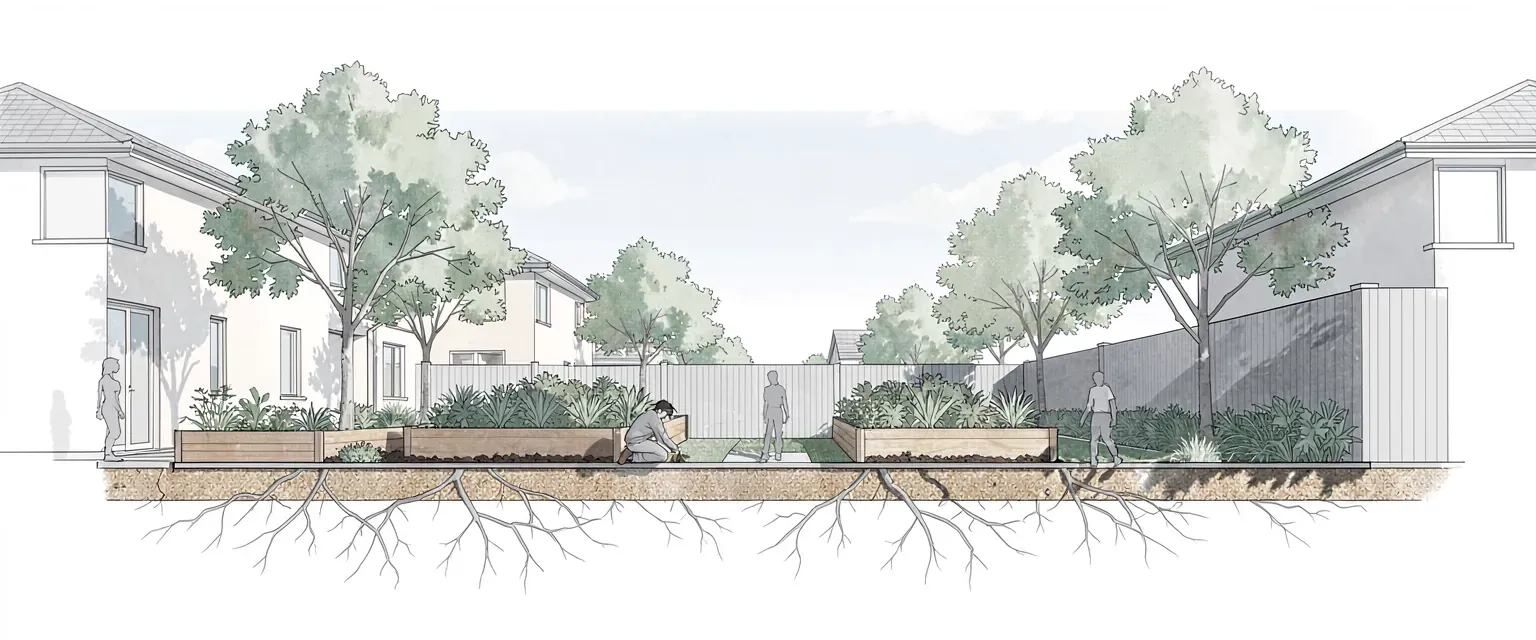
Deciduous trees are bare in early spring and fill back in as it goes on. A bed that looked like full sun on a late-winter check can end up with real midday shade by the time a nearby tree's canopy is back in full leaf — the shadow it casts gets denser, not just shorter, as the leaves fill in. If you traced a neighbouring tree in the planner over winter, it is worth re-checking the same bed once spring is properly underway rather than trusting the earlier read.